
Sciatica Pain Treatment in Delhi NCR
Is a sharp pain shooting from your lower back down your leg, making everyday activities difficult? It could be sciatica. Without timely care, the pain can worsen and start affecting your mobility and quality of life.
If you’re looking for expert sciatica pain treatment in Delhi NCR, Dr. Namrata Dabas offers complete, personalised, and long-lasting pain relief medical procedures that aim for your overall recovery.
Reach Out for Expert Care
Understanding Sciatica
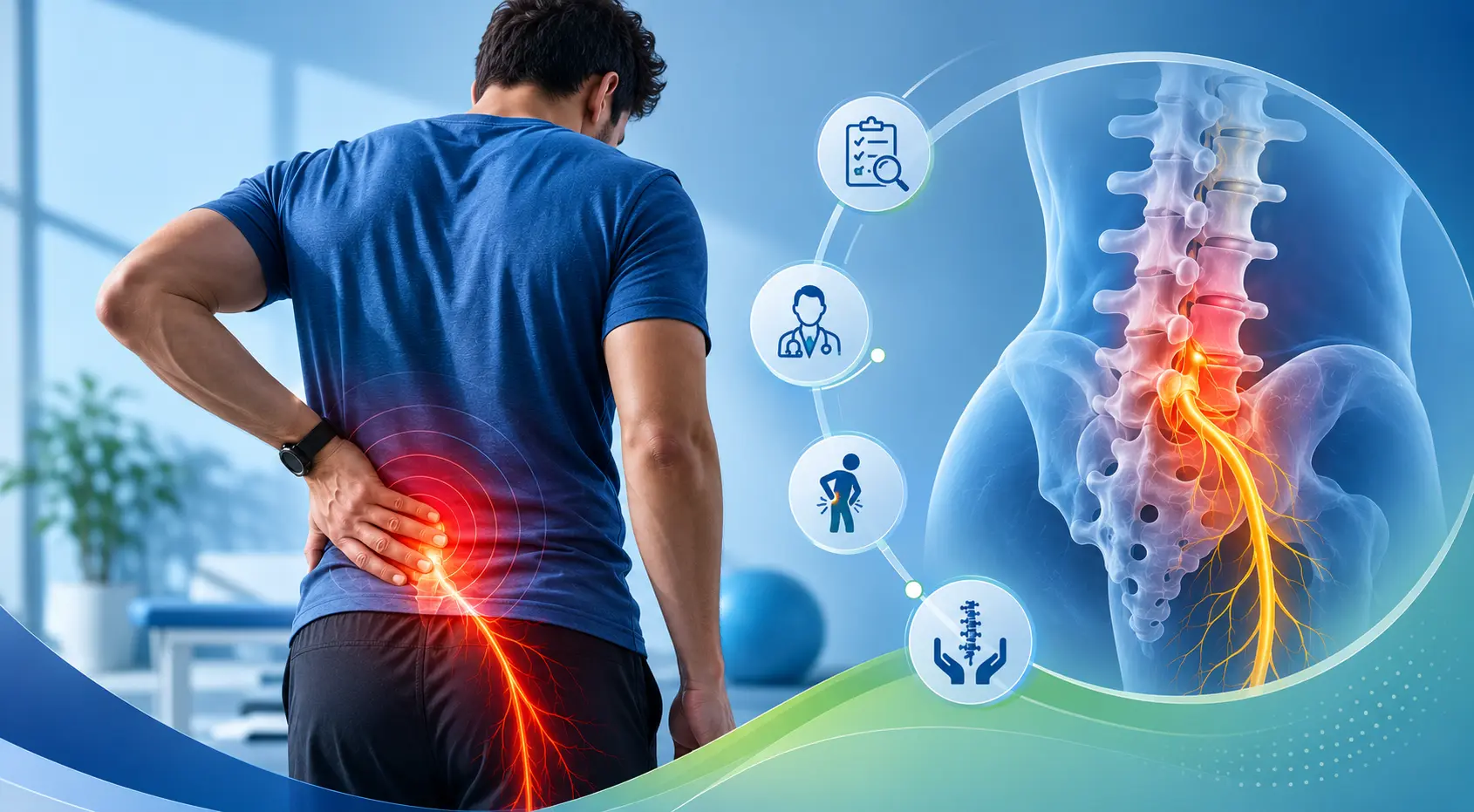
Sciatica occurs when the sciatic nerve is irritated or compressed, causing pain that radiates from the lower back through the buttock and down one leg. Sciatica is not a disease but a symptom of an underlying condition affecting the sciatic nerve.
The sciatic nerve is the largest and longest nerve in the body, extending from the lower spine through the hips and buttocks and down each leg.
When the sciatic nerve becomes compressed or inflamed, it causes pain that travels along its path, typically affecting one side of the body. The pain can range from a mild ache to a sharp, burning, or electric shock-like sensation, depending on the severity of the nerve irritation.
In addition to pain, some people may experience tingling, numbness, or muscle weakness in the affected leg, making everyday activities such as walking, sitting, or standing more difficult.
What Causes Sciatica?
Sciatica occurs when the sciatic nerve is compressed or irritated, most commonly due to a herniated disc or other spinal conditions. The common causes of sciatica include:
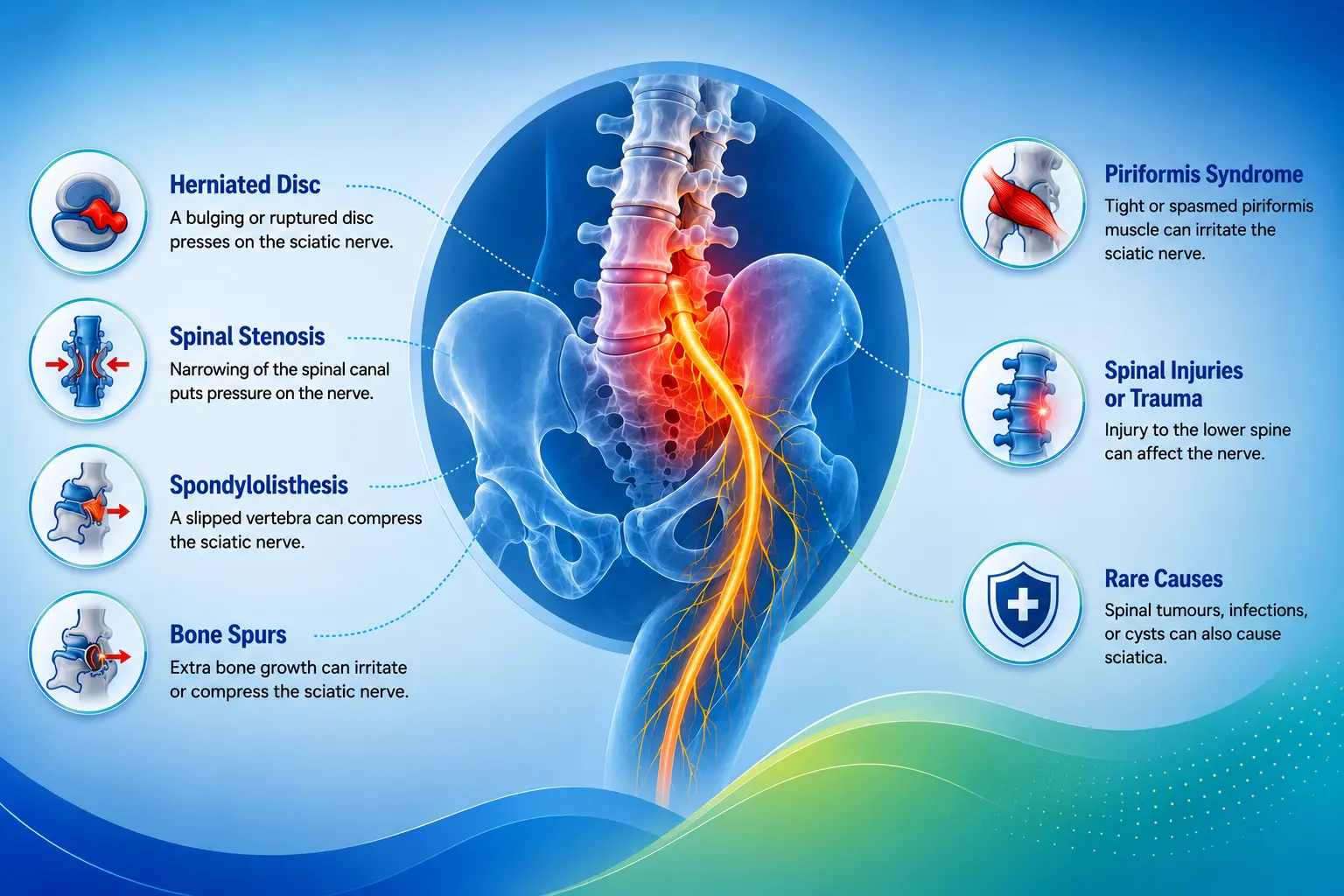
What Are the Common Symptoms of Sciatica?
Sciatica commonly causes pain that radiates from the lower back down one leg, along with numbness, tingling, or muscle weakness. Common symptoms of sciatica include:
- Pain that radiates from the lower back through the buttock and down one leg
- Sharp, burning, shooting, or electric shock-like pain
- Tingling or “pins and needles” sensation in the leg or foot
- Numbness in the affected leg, foot, or toes
- Muscle weakness in the affected leg
- Pain that worsens with prolonged sitting, coughing, sneezing, or bending
- Difficulty standing, walking, or moving comfortably
- In severe cases, loss of bowel or bladder control or numbness around the groin requires immediate medical attention
Risk Factors Associated With Sciatica
Several lifestyle, age-related, and medical factors can increase the risk of developing sciatica by placing additional stress on the lower back and sciatic nerve. Some common risk factors include:
- Ageing: Natural wear and tear of the spine increases the risk of nerve compression.
- Obesity: Excess body weight puts added pressure on the lower back.
- Sedentary lifestyle: Lack of physical activity weakens the muscles supporting the spine.
- Occupations involving heavy lifting: Repetitive bending, twisting, or lifting can strain the lower back.
- Prolonged sitting: Sitting for long hours increases pressure on the lower spine.
- Poor posture: Incorrect sitting or standing posture can contribute to spinal problems.
- Diabetes: May increase the risk of nerve damage.
- Smoking: Reduces blood supply to spinal discs, accelerating degeneration
How Is Sciatica Diagnosed?
Sciatica is diagnosed through a combination of medical history, physical examination, and imaging tests to identify the underlying cause of nerve compression. Your pain management specialist may recommend:
- Medical history: To understand your symptoms, pain pattern, and medical conditions.
- Physical examination: To assess muscle strength, reflexes, sensation, and nerve function.
- Straight leg raise test: A commonly used test to identify sciatic nerve irritation.
- X-ray: To detect bone spurs or structural abnormalities.
- MRI scan: The preferred imaging test to identify herniated discs and nerve compression.
- CT scan: May be recommended if an MRI is not suitable.
- Electromyography (EMG): Measures nerve and muscle function when nerve damage is suspected.
When Should You See a Pain Management Specialist in Delhi NCR?
You should consult a pain management specialist in Delhi NCR if your sciatica pain is severe, persistent, worsening, or begins to affect your daily activities and quality of life. You should seek medical attention if you experience:
- Sciatica pain lasting more than a few weeks
- Severe pain that does not improve with rest or medications
- Pain that interferes with walking, standing, or daily activities
- Persistent numbness, tingling, or muscle weakness in the leg
- Pain that worsens over time or keeps recurring
- Pain following a fall, accident, or spinal injury
- Difficulty controlling bowel or bladder function (medical emergency)
- Numbness around the groin or inner thighs (saddle numbness) (medical emergency)
Early evaluation by a pain management specialist can help identify the underlying cause, relieve symptoms, and prevent long-term nerve damage.
Why Patients Choose Dr. Namrata Dabas For Their Treatment Journey?
Patients trust Dr. Namrata Dabas for her patient-centred approach and expertise in managing acute and chronic pain conditions. She focuses on identifying the root cause of pain and creating personalised treatment plans that aim to provide long-lasting relief while improving overall quality of life.
Here’s why patients choose Dr. Namrata Dabas:
- Expertise in diagnosing and treating sciatica and spine-related pain conditions
- Personalised treatment plans tailored to each patient’s needs
- Advanced non-surgical and minimally invasive pain management techniques
- Comprehensive evaluation to address the underlying cause of pain
- Focus on improving mobility, function, and long-term pain relief
- Compassionate, patient-first care with clear guidance throughout treatment
- Emphasis on reducing dependence on long-term pain medications
- Commitment to evidence-based treatments and holistic recovery
Frequently Asked Questions
1. Can sciatica go away on its own? expand_more
Yes, mild cases of sciatica may improve within a few weeks with rest, activity modification, and conservative treatment. However, if the pain persists, worsens, or is accompanied by numbness or weakness, you should consult a pain management specialist.
2. What is the sciatica treatment cost in Delhi NCR? expand_more
The cost of sciatica treatment in Delhi NCR depends on the underlying cause, diagnostic tests required, and the type of treatment recommended, such as medications, physiotherapy, injections, or minimally invasive procedures. A consultation with a pain management specialist is the best way to determine the most suitable treatment plan and its cost.
3. Is walking good for sciatica pain? expand_more
Yes, gentle walking can help reduce pain and improve mobility for many people with sciatica. However, avoid activities that worsen your symptoms and follow your doctor's recommendations regarding exercise.
4. Can sciatica be treated without surgery? expand_more
Yes. Most cases of sciatica can be managed successfully with non-surgical treatments such as medications, physiotherapy, lifestyle modifications, and image-guided pain management procedures. Surgery is usually considered only when conservative treatments fail, or there is significant nerve compression.
5. How long does it take to recover from sciatica? expand_more
According to Dr. Namrata Dabas, one of the best pain management specialists in Delhi NCR, the recovery varies depending on the cause and severity of the condition. Mild cases may improve within 4–6 weeks, while more severe cases may take longer and require specialised treatment.
6. Can sitting for long hours make sciatica worse? expand_more
Yes. Prolonged sitting increases pressure on the lower back and sciatic nerve, which can worsen pain and stiffness. Taking regular breaks, maintaining good posture, and using ergonomic seating can help reduce discomfort.
7. Can sciatica return after treatment? expand_more
Yes, sciatica can recur if the underlying cause is not addressed or if risk factors such as poor posture, obesity, or repetitive heavy lifting continue. Following your treatment plan and maintaining a healthy lifestyle can help reduce the risk of recurrence.
8. Is sciatica the same as lower back pain? expand_more
No. Lower back pain is a general symptom, whereas sciatica specifically refers to pain caused by irritation or compression of the sciatic nerve. Sciatica typically radiates from the lower back through the buttock and down one leg.
9. Which doctor should I consult for sciatica treatment? expand_more
A pain management specialist is well-equipped to diagnose the cause of sciatica and recommend personalised treatment options. Depending on your condition, they may also work with physiotherapists, neurologists, or spine surgeons to provide comprehensive care. Being one of the leading pain specialists in India, Dr. Namrata Dabas can offer great help for your

Dr. Namrata Dabas's Medical Content Team
Dr. Namrata Dabas’s medical content team specialises in creating accurate, clear, and patient-focused healthcare content. With strong clinical understanding and expertise in technical writing and SEO, the team translates complex medical information into reliable, accessible resources that support informed decisions and uphold Dr. Namrata Dabas’s commitment to quality care.
This content is reviewed by Dr. Namrata Dabas
Related Conditions

Neck Pain Treatment in Delhi-NCR
Many people dismiss neck pain as a temporary strain or poor sleeping posture, but when it becomes frequent or starts…
Slipped Disc Treatment in Delhi-NCR
A slipped disc is treated through a mix of physiotherapy, pain-relief medication, epidural steroid injections, and regenerative options like PRP…
Back Pain Treatment in Delhi NCR
Is back pain making your everyday activities difficult? Whether it’s a persistent lower back ache, stiffness, or pain that radiates…
Related Blogs
Sciatica vs Back Pain: How to Tell the Difference
Back pain usually stays local to the lower back and comes from muscle or joint…
Read Article →
Nerve vs. Muscle vs. Joint Pain: Know the Difference
Pain is your body’s alarm system but not all alarms mean the same thing. A…
Read Article →
5 Myths About Regenerative Treatments for Joint and Back Pain
Should you trust the doctor who says regenerative medicine will fix everything, or the one…
Read Article → WhatsApp