
Neurolytic Blocks Procedure in Delhi-NCR
When pain does not ease even with strong medicines, everything else in life shrinks. Sleep, meals, conversations and simple walks all become harder, for you and for the people who care for you. Families feel it too. Watching someone you love struggle through the night can leave you wondering whether anything more can be done. For many people, there is.
A neurolytic block is an advanced pain-relief procedure designed for exactly this situation. It targets the specific nerves that carry pain signals, so the brain receives fewer of them. It is used most often for severe cancer-related pain, and in selected cases for other long-standing pain conditions that have not responded to usual treatments. The aim is simple: more comfortable days, better rest and more time for the things that matter to you.
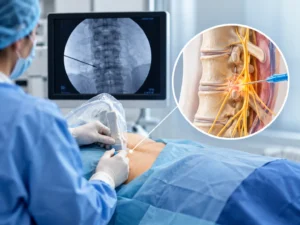
Dr. Namrata Dabas, pain management and regenerative medicine specialist, offers image-guided neurolytic blocks across Delhi-NCR with a focus on comfort, safety and honest guidance at every step. She takes the time to understand your pain, explain your options clearly and involve your family in decisions. This page explains what the procedure involves, in plain language, from how it works and who it may help to recovery, risks and where you can consult her in Dwarka, Gurugram and Sonipat.
Reach Out for Expert Care
What Is a Neurolytic Block?
A neurolytic block is a minimally invasive procedure in which a specialist deliberately uses a chemical (such as alcohol or phenol) or a thermal technique to interrupt a pain-carrying nerve. It is used when pain is severe, long-lasting and not controlled well enough by medicines or simpler nerve blocks.
The word “neurolytic” simply means “nerve-dissolving”. The goal is not to remove the cause of the pain. The goal is to quieten the nerve pathway that carries it, so you can eat, sleep, move and rest more comfortably.
- It is done through a fine needle, without a surgical cut
- It is guided by live imaging (X-ray/fluoroscopy, ultrasound or CT) for accuracy
- It is usually considered after other options have been tried or are unsuitable
A neurolytic block is a targeted, needle-based procedure that switches off a troublesome pain pathway for a prolonged period. It is usually considered when medicines and simpler nerve blocks are no longer giving enough relief.
How Does a Neurolytic Block Relieve Pain?
A neurolytic block relieves pain by damaging the outer coating and fibres of a specific nerve or nerve cluster, so pain signals can no longer travel reliably to the brain. This is why relief can last far longer than with a regular numbing injection.
Think of the nerve as a phone cable carrying a constant, unwanted call. A regular nerve block mutes the call for a while. A neurolytic block cuts the cable’s signal for much longer.
There are two common approaches:
- Chemical neurolysis: medicines such as dehydrated alcohol or phenol are placed next to the target nerve
- Thermal neurolysis: heat or cold is used to treat the nerve, for example radiofrequency ablation or cryoneurolysis (read more on our Radiofrequency Ablation page)
Before the final step, a small amount of local anaesthetic is usually injected first. This acts as a “test run”. If your pain eases during this trial, it suggests the right nerve has been identified.
In short: Neurolytic blocks work by interrupting pain signals at their source, which gives longer relief than a standard nerve block.
Which Conditions Can Be Treated With a Neurolytic Block?
Neurolytic blocks are most often used for severe cancer-related pain, particularly in the abdomen, pelvis and lower back or tailbone region. They are also used selectively for certain chronic, non-cancer pain conditions when other treatments have not worked well.
Commonly treated situations include:
- Upper abdominal pain from pancreatic and other upper abdominal cancers
- Pelvic pain from cancers of the cervix, uterus, bladder, prostate or rectum
- Pain in the tailbone or perineum (the area between the genitals and anus)
- Pain from nerve invasion by tumours or from cancer spread to bones
- Some facial nerve pain conditions such as trigeminal neuralgia, when other treatments are not suitable
- Selected chronic pain conditions involving the sympathetic nerves, such as certain poor-circulation or nerve-related limb pain
Dr. Namrata Dabas first examines the cause of your pain. A neurolytic block is recommended only if it is likely to give you real benefit.
What Are the Different Types of Neurolytic Blocks?
Neurolytic blocks are named after the nerve or nerve group they target. The most common types are the celiac plexus, superior hypogastric plexus, ganglion impar and lumbar sympathetic blocks, each matched to a specific pain location.
| Type of block | Area of pain it helps |
| Celiac plexus / splanchnic neurolysis | Upper abdomen, pancreas, liver, stomach, bowel |
| Superior hypogastric plexus neurolysis | Lower abdomen and pelvis |
| Ganglion impar neurolysis | Tailbone, rectum, perineum |
| Lumbar sympathetic neurolysis | Leg and foot pain involving sympathetic nerves |
| Intercostal / peripheral nerve neurolysis | Chest wall or a specific nerve territory |
| Trigeminal branch neurolysis | Facial nerve pain in selected patients |
Your pain location, scan findings and general health decide which block suits you best. Dr. Namrata reviews each of these carefully before recommending a procedure, so the treatment is matched to you and not chosen from a standard template.
Who Is a Good Candidate for a Neurolytic Block?
A good candidate is someone with severe, well-localised pain from a known cause, whose pain has not been adequately controlled by medicines or other treatments, and who has responded well to a trial (diagnostic) nerve block.
You may be a suitable candidate if:
- Your pain is intense and affecting sleep, appetite, mood or daily activity
- Medicines cause side effects such as drowsiness, nausea or constipation that limit their use
- A trial block gave you noticeable relief
- Your scans and tests support a clear pain source
A neurolytic block may not be suitable if:
- You have an active infection near the injection site
- You have a bleeding disorder that cannot be safely corrected
- The pain is widespread or its cause is unclear
- You are unable to lie in the required position for the procedure
Every person’s pain, health and goals are different, so each case is reviewed individually, and the benefits and limits of the procedure are discussed openly before any plan is made. The best results come from careful selection, so a proper pain evaluation always comes first.
How Should You Prepare for a Neurolytic Block?
Preparation involves a pain consultation, review of your scans and medical reports, blood tests, and clear instructions about fasting. Your doctor will explain everything beforehand so you and your family feel informed and calm.
What usually happens before the procedure:
- Consultation: Dr. Dabas understands your pain history, medicines and goals
- Review of reports: MRI, CT or other scans and recent blood tests
- Trial block (if needed): a local-anaesthetic injection to confirm the right target
- Consent discussion: benefits, possible side effects and alternatives are explained
- Fasting instructions: you will be told when to stop eating and drinking
- Arrangements: bring a family member or caregiver along, and carry all reports and your medicine list
Knowing what to expect, from the tests beforehand to the fasting instructions on the day, helps you and your family feel calm and prepared. Thorough preparation makes the procedure safer and the day itself far less stressful.
How Is the Neurolytic Block Procedure Performed, Step by Step?
The procedure takes about 30 to 60 minutes and is performed under imaging guidance with monitoring and local anaesthetic, with or without light sedation. A fine needle is guided to the target nerve, and the neurolytic agent is then injected carefully.
Step by step:
- Settling in: you are taken to the procedure room, and an IV line is placed. Heart rate, blood pressure and oxygen levels are monitored throughout
- Positioning: you are helped into a comfortable position, often lying on your stomach or side
- Numbing the skin: the area is cleaned and numbed so the needle insertion is well tolerated
- Needle placement: using live X-ray (fluoroscopy), CT or ultrasound, the doctor guides the needle to the target nerves
- Confirming the position: a small amount of contrast dye shows that the medicine will spread to the right place
- Local anaesthetic first: this numbs the area, so the next step is more comfortable
- Neurolytic agent: alcohol or phenol is injected slowly (or a thermal technique is applied)
- Needle removal and dressing: the needle is cleared and removed, and a small dressing is applied
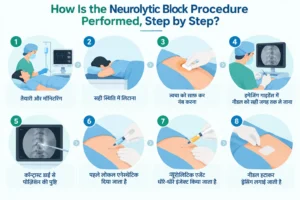
Most people feel pressure or brief discomfort rather than sharp pain. Sedation can be added if you feel anxious.The procedure is short, closely monitored and guided by imaging at every step.
What Is Recovery Like After a Neurolytic Block?
Most people rest and are monitored for a few hours after the procedure, and many go home the same day or after a short stay. Pain relief may appear within hours to a few days, and you can usually return to light daily activity soon after.
After the procedure:
- You are observed for several hours, with regular blood pressure checks
- You may feel tired or lightheaded, so get up slowly
- Mild soreness at the needle site is common for a day or two
- Some people notice relief quickly, while for others it builds over several days
At home:
- Have someone accompany you and avoid driving on the day of the procedure
- Rest, drink fluids and eat light meals as advised
- Return promptly if you notice fever, worsening pain, new weakness, numbness or difficulty passing urine or stool
Recovery is usually smooth, with close observation on the day and simple follow-up instructions at home. Your care team stays available after the procedure, so you and your family can reach out if anything feels unusual.
How Long Does Relief From a Neurolytic Block Last?
Relief from a chemical neurolytic block commonly lasts for a few months, though this varies from person to person. In some people, especially with advanced illness, it can last much longer. Nerves can slowly recover over time, so results are not guaranteed.
What affects how long relief lasts:
- The type of block and the agent used
- The location and cause of your pain
- How the pain behaves over time, especially if an underlying condition progresses
- Your individual healing response
Duration varies from person to person, so Dr. Dabas will set realistic expectations with you before the procedure and there are no surprises. A clear conversation beforehand helps you and your family plan with confidence.
What Are the Risks and Side Effects of a Neurolytic Block?
Most side effects of neurolytic blocks are temporary and manageable, such as soreness, a drop in blood pressure or loose stools. Serious complications are uncommon, and doing the procedure under imaging guidance with monitoring helps reduce them further.
Possible effects include:
- Temporary increase in pain or soreness at the site
- Lightheadedness or low blood pressure, especially after celiac plexus blocks
- Loose stools or diarrhoea after upper abdominal blocks
- Numbness, tingling or a burning feeling in the treated area
- Flushing or discomfort related to alcohol use
- Bleeding, bruising or infection at the needle site
Rare but serious risks include:
- Injury to nearby nerves or structures, which could cause weakness or changes in bladder or bowel function
- Damage to nearby organs or blood vessels
Risks specific to your type of block are explained in full during the consent discussion, so you can decide with complete information. The procedure is considered safe in experienced hands, and knowing the risks in advance lets you make a confident choice.
How Is a Neurolytic Block Different From Other Pain Treatments?
Unlike painkillers, which work throughout the body, or standard nerve blocks, which give temporary relief, a neurolytic block targets a specific nerve pathway and aims to provide longer-lasting relief with fewer medicine side effects.
| Option | How it works | Typical duration |
| Pain medicines | Act on the whole body | Short-acting, need regular doses |
| Standard nerve block (local anaesthetic ± steroid) | Temporarily numbs a nerve | Hours to weeks |
| Radiofrequency ablation | Uses heat to disrupt a nerve | Months, often used for joint and spine pain |
| Neurolytic block | Chemically or thermally disrupts a nerve | Months, sometimes longer |
| Pain pumps / spinal devices | Deliver medicine or stimulation near the spine | Long-term, for selected patients |
Risks vary by block type and are explained fully during consent. With imaging guidance and monitoring, the procedure is considered safe in experienced hands, and knowing the risks beforehand helps you choose with confidence.
Why Choose Dr. Namrata Dabas for Neurolytic Blocks?
Choosing the right specialist for severe pain matters because the wrong treatment path can prolong suffering, add medicine side effects or lead to avoidable procedures, and this is where Dr. Namrata’s non-surgical, evidence-based focus sets her apart.
Patients choose Dr. Namrata Dabas because she offers:
- 20+ years of experience in pain management and regenerative medicine
- Image-guided precision for greater accuracy and safety during every block
- Personalised treatment plans based on your specific diagnosis and pain source, not a generic protocol
- A non-surgical, minimally invasive approach focused on lasting relief and better quality of life
- Multiple consultation locations including Dwarka, Sonipat and Gurugram for easier access
Her approach combines clinical precision with genuine patient education, so you and your family always understand why a treatment is being recommended, not just what it involves.
Consultation Centres for Neurolytic Blocks in Delhi-NCR
Dr. Namrata Dabas consults at leading hospitals across Delhi-NCR, with advanced interventional procedures such as neurolytic blocks carried out at her dedicated centre in Sonipat. Patients from Dwarka, Gurugram, and nearby areas can easily access expert care along with follow-up support.
Pain Management Consultation in Dwarka
Visit Manipal Hospital, Dwarka, for a thorough evaluation, diagnosis, and a pain treatment plan tailored to you, including whether a trial or neurolytic block is right for your pain.
Neurolytic Block Procedures in Sonipat
Advanced procedures such as image-guided neurolytic blocks and other interventional pain treatments are performed at Manipal Jivisha Cancer Centre, Sonipat, along with follow-up care.
Pain Management Consultation in Gurugram
Consult Dr. Namrata Dabas at Manipal Hospital, Palam Vihar, Gurugram, for a thorough assessment and a personalised pain treatment plan.
Patients travelling from Rohtak, Panipat, Karnal, and other parts of Haryana and Delhi-NCR regularly visit these centres for evaluation, treatment, and continued care.
Relief From Severe Pain Can Start With One Consultation
Whether it’s a constant ache that wears you down or a sharp pain that wakes you at night, severe pain can take over everyday life. If medicines and simpler treatments haven’t brought enough relief, it may be time for a more targeted approach built around your specific diagnosis, not trial and error.
With Dr. Namrata Dabas, treatment focuses on easing pain at its source, so you can rest, move and spend time with your loved ones without pain deciding the day.
Book your consultation today and take the first step toward lasting relief, without undergoing surgery.
Medical Disclaimer: The information on this page is provided for educational purposes only and should not be used as a substitute for medical advice. Treatment recommendations vary from person to person and should always be based on an individual consultation and clinical evaluation by a qualified healthcare professional.

Dr. Namrata Dabas's Medical Content Team
Dr. Namrata Dabas’s medical content team specialises in creating accurate, clear, and patient-focused healthcare content. With strong clinical understanding and expertise in technical writing and SEO, the team translates complex medical information into reliable, accessible resources that support informed decisions and uphold Dr. Namrata Dabas’s commitment to quality care.
This content is reviewed by Dr. Namrata Dabas
 WhatsApp