
Platelet Rich Plasma (PRP) Therapy in Delhi-NCR
Living with joint pain, a nagging sports injury, or early arthritis can quietly take over your life; climbing stairs feels harder, your morning walk gets shorter, and simple movements start to hurt. If you’ve been searching for PRP therapy in Delhi-NCR that treats the problem at its source instead of just masking the pain, you’re in the right place.
Platelet-Rich Plasma (PRP) therapy is a regenerative, non-surgical treatment that uses your own blood’s healing power to repair damaged tissue, calm inflammation, and restore movement. Under the care of Dr. Namrata Dabas, a pain management and regenerative medicine specialist with over 20 years of experience across Gurugram, Dwarka, and Sonipat, patients get a treatment plan built around their specific condition, not a one-size-fits-all injection. Here’s everything you need to know before your consultation.
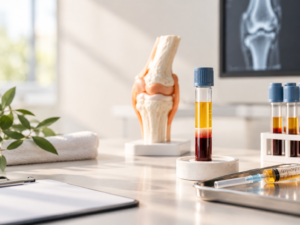
In this procedure page, you’ll learn how PRP therapy works, which conditions it treats, and whether you might be a good candidate along with what the procedure, recovery, and cost typically look like.
Reach Out for Expert Care
What Is PRP Therapy and How Does It Work?
Platelet-Rich Plasma (PRP) therapy is a regenerative, non-surgical treatment that uses concentrated platelets from your own blood to repair damaged tissue, reduce inflammation, and restore mobility.
PRP therapy works by concentrating the platelets and growth factors already present in your blood, then reintroducing them precisely into the injured area to jump-start your body’s own repair process. Because the treatment uses your own blood, the risk of allergic reaction or rejection is minimal, your body is essentially healing itself with its own resources.
Here’s the simple three-step process:
- Blood draw: A small sample is taken from your arm, just like a routine blood test.
- Platelet concentration: The sample is spun in a centrifuge to separate the platelet-rich plasma from the rest of the blood.
- Image-guided injection: The concentrated PRP is injected directly into the affected joint, tendon, or ligament under ultrasound guidance for precision and safety.
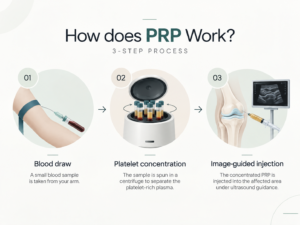
The entire process usually takes under an hour from start to finish, and most patients walk in and out the same day without needing anaesthesia or a hospital stay.
Which Conditions Can PRP Therapy Treat?
PRP therapy isn’t limited to one type of injury, it’s used across a range of orthopaedic and pain-related conditions where tissue healing has slowed down naturally. Dr. Namrata Dabas evaluates each case individually to confirm PRP is the right fit before recommending it.
Conditions commonly treated with PRP therapy include:
- Knee osteoarthritis and early-stage arthritis
- Tennis elbow
- Shoulder pain and rotator cuff injuries
- Plantar fasciitis
- Tendonitis and ligament injuries
- Sports injuries (sprains, strains, overuse injuries)
- Chronic joint pain that hasn’t responded to medication or physiotherapy
If your condition isn’t listed here, it’s still worth a consultation. Many soft tissue and joint conditions can benefit from PRP even if they present a little differently from patient to patient. Every patient’s pain pattern and tissue condition is slightly different, which is why a personalized evaluation matters more than matching your symptoms to a checklist.
How Do You Know If You Need PRP Therapy?
You don’t need to wait until the pain becomes unbearable to seek help. Recognising the early signs can mean a faster, simpler recovery. Pain that keeps returning, or that only partially responds to rest and medication, is often your body’s way of signalling that the tissue needs more than time to heal on its own. The earlier you address it, the more treatment options, including PRP tend to be effective.
Consider consulting a specialist if you notice:
- Joint or tendon pain that lingers for weeks
- Pain that isn’t improving with rest, medicines, or physiotherapy
- Recurring sports injuries that keep flaring up
- Early stiffness or discomfort linked to arthritis
- Trouble with everyday movements like squatting, climbing stairs, or gripping objects
- A strong preference to avoid or delay surgery
If two or more of these sound familiar, it’s a good time to get a professional evaluation rather than waiting things out. A timely consultation can help you avoid months of trial-and-error with treatments that only offer partial relief.
How Is PRP Therapy Diagnosed and Planned?
Before recommending PRP therapy, Dr. Namrata Dabas conducts a thorough evaluation to confirm it’s the right fit for your body and your specific condition. This step-by-step approach ensures PRP is recommended only when it’s genuinely likely to help, not as a default treatment for every kind of pain.
The evaluation typically includes:
- A detailed clinical examination and pain assessment
- Ultrasound imaging to evaluate tendons and soft tissue
- X-rays to assess the extent of arthritis, where relevant
- MRI scans in select, more complex cases
- A review of any treatments you’ve already tried
Once your evaluation is complete, you’ll receive a personalized treatment plan that outlines what to expect at each stage, so there are no surprises going in. This clarity upfront also helps set realistic expectations about timelines and outcomes, so you know exactly what recovery is likely to look like for your specific condition.
What Does Recovery After PRP Therapy Look Like?
PRP therapy is minimally invasive, but healing still takes a partnership between the treatment and your body’s own recovery process. Recovery is generally quicker and gentler than surgical alternatives, which is one of the reasons many patients prefer it.
Most patients are guided through:
- A short observation period immediately after the injection
- Mild soreness at the injection site for a day or two, which typically settles on its own
- A personalised physiotherapy and strengthening plan to support tissue repair
- Gradual return to normal activity, paced according to your specific condition
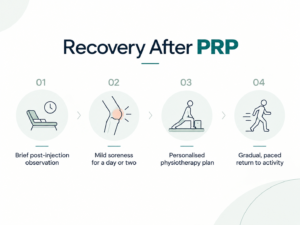
Sticking to the post-procedure plan, rather than rushing back to full activity, is one of the biggest factors in how well and how quickly you recover. Patients who follow their physiotherapy schedule closely tend to see steadier, more lasting improvement than those who skip ahead.
How Much Does PRP Therapy Cost in Delhi-NCR?
The cost of PRP therapy in Delhi-NCR varies depending on the joint or area being treated, the number of sessions required, and the complexity of your condition. Since PRP is a personalised treatment rather than a fixed package, pricing is confirmed only after your evaluation.
Factors that typically influence the cost include:
- The specific joint, tendon, or area being treated
- Number of PRP sessions recommended
- Whether imaging (ultrasound, X-ray, or MRI) is needed for diagnosis
- Any additional physiotherapy or rehabilitation included in your plan
During your consultation, Dr. Namrata Dabas’s team will walk you through the exact cost breakdown for your specific treatment plan, so you know what to expect before you begin. Many patients find it helpful to ask about the total cost across the full course of treatment, rather than just the price of a single session, to plan accordingly.
Why Do Patients Across Delhi-NCR Choose Dr. Namrata Dabas?
Choosing the right specialist matters just as much as choosing the right treatment. The outcome of a PRP injection depends heavily on the precision of the procedure and the judgement behind the treatment plan, which is why experience and technique make a real difference.
Patients consistently choose Dr. Namrata Dabas for:
- 20+ years of experience in pain management and regenerative medicine
- Image-guided precision injections for greater accuracy and safety
- Personalised treatment plans based on your specific diagnosis, not a generic protocol
- A non-surgical, regenerative approach focused on healing, not just symptom relief
- Multiple consultation locations across Delhi-NCR for easier access
This combination of experience and a genuinely individualised approach is what patients repeatedly mention when explaining why they chose to continue their care with her. For many, it’s the reassurance of having one consistent specialist guide them from diagnosis through recovery, rather than being passed between different providers.
Consultation Centres for PRP Therapy in Delhi-NCR
Dr. Namrata Dabas consults at leading hospitals across Delhi-NCR, with advanced interventional procedures carried out at her dedicated centre in Sonipat. Patients from Dwarka, Gurugram, and nearby areas can easily access expert care along with follow-up support.
PRP Therapy Consultation in Dwarka
Visit Manipal Hospital, Dwarka, for a thorough evaluation, diagnosis, and a treatment plan tailored to you.
PRP Therapy & Procedures in Sonipat
Advanced procedures such as image-guided PRP injections and regenerative therapy are performed at Manipal Jivisha Cancer Centre, Sonipat, along with follow-up care.
PRP Therapy Consultation in Gurugram
Consult Dr. Namrata Dabas at Manipal Hospital, Palam Vihar, Gurugram, for a thorough assessment and personalised treatment plan.
Patients travelling from Rohtak, Panipat, Karnal, and other parts of Haryana and Delhi-NCR regularly visit these centres for evaluation, treatment, and continued care.
Your Path to Pain-Free Movement Starts Here
Joint pain, a stubborn sports injury, or early arthritis doesn’t have to define your daily life. If rest, medication, or physiotherapy haven’t given you the lasting relief you were hoping for, PRP therapy with Dr. Namrata Dabas offers a non-surgical path forward, one focused on real healing, not just temporary comfort.
Book your consultation today and take the first step toward stronger joints, easier movement, and getting back to the things you love, without surgery.
Medical Disclaimer: The information on this page is provided for educational purposes only and should not be used as a substitute for medical advice. Treatment recommendations vary from person to person and should always be based on an individual consultation and clinical evaluation by a qualified healthcare professional.
Frequently Asked Questions
How soon can I go back to work or my daily routine after a PRP injection? expand_more
Most patients resume light daily activities within a day or two. Depending on the joint treated and your job's physical demands, your doctor may recommend easing back into more strenuous tasks or exercise over one to two weeks.
Will I need to stop any medications before or after PRP therapy? expand_more
Certain medications, particularly anti-inflammatory painkillers, can interfere with the healing response PRP relies on. Your doctor will review your current medications and advise which ones to pause and for how long, both before and after the procedure.
Is PRP therapy safe for older adults or people with other health conditions? expand_more
PRP uses your own blood, which makes it a generally safe option even for older patients, but suitability still depends on individual health factors like blood disorders or certain medications. A proper evaluation with your doctor will confirm if it's right for you.
How long do the results of PRP therapy typically last? expand_more
Results vary by condition and severity, but many patients experience relief lasting several months to over a year. Some conditions may benefit from periodic follow-up sessions to maintain results.
Can PRP therapy be combined with physiotherapy for better results? expand_more
Yes, physiotherapy is often recommended alongside PRP therapy. Combining the two supports tissue healing, improves strength and flexibility, and can lead to better long-term outcomes than PRP alone.

Dr. Namrata Dabas's Medical Content Team
Dr. Namrata Dabas’s medical content team specialises in creating accurate, clear, and patient-focused healthcare content. With strong clinical understanding and expertise in technical writing and SEO, the team translates complex medical information into reliable, accessible resources that support informed decisions and uphold Dr. Namrata Dabas’s commitment to quality care.
This content is reviewed by Dr. Namrata Dabas
Related Blogs
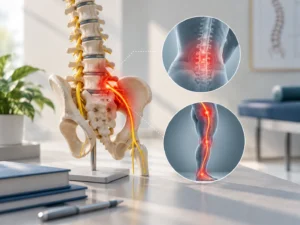
Sciatica vs Back Pain: How to Tell the Difference
Back pain usually stays local to the lower back and comes from muscle or joint…
Read Article →
Nerve vs. Muscle vs. Joint Pain: Know the Difference
Pain is your body’s alarm system but not all alarms mean the same thing. A…
Read Article →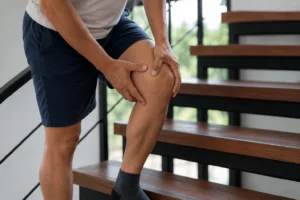
Knee Pain When Climbing Stairs: Should I Be Worried?
Knee pain when climbing stairs is one of the most common early warning signs of…
Read Article → WhatsApp