
Burning or Tingling Pain: What Does It Mean?
Have you ever felt a sudden burning sensation, “pins and needles,” or tingling in your hands, feet, arms, or legs?
While these sensations can happen temporarily after sitting or sleeping in an awkward position, they shouldn’t be ignored if they occur frequently or are accompanied by pain, numbness, or weakness.
If you are looking for burning & tingling pain treatment in Delhi NCR and your symptoms are persistent, consulting Dr Namrata Dabas, one of the best pain management specialists in Delhi NCR, can help identify the underlying causes and recommend the most appropriate treatment for your faster recovery.
In this guide, we’ll explain the common causes of burning or tingling pain, the symptoms to watch for, and the treatment options that can help you find lasting relief.
Reach Out for Expert Care
What is Burning and Tingling Pain?
- Burning and tingling pain, medically referred to as paresthesia, are unusual sensations that may feel like pins and needles, prickling, burning, numbness, or electric shocks in different areas of the body.
- In most cases, these sensations result from irritation or damage to the nerves, which can send unusual messages to the brain.
- While tingling may occur in some cases temporarily, such as when there is a “sleeping” limb in one’s body part because of staying in the same position for long hours, persistent burning and tingling sensations should be looked into medically.
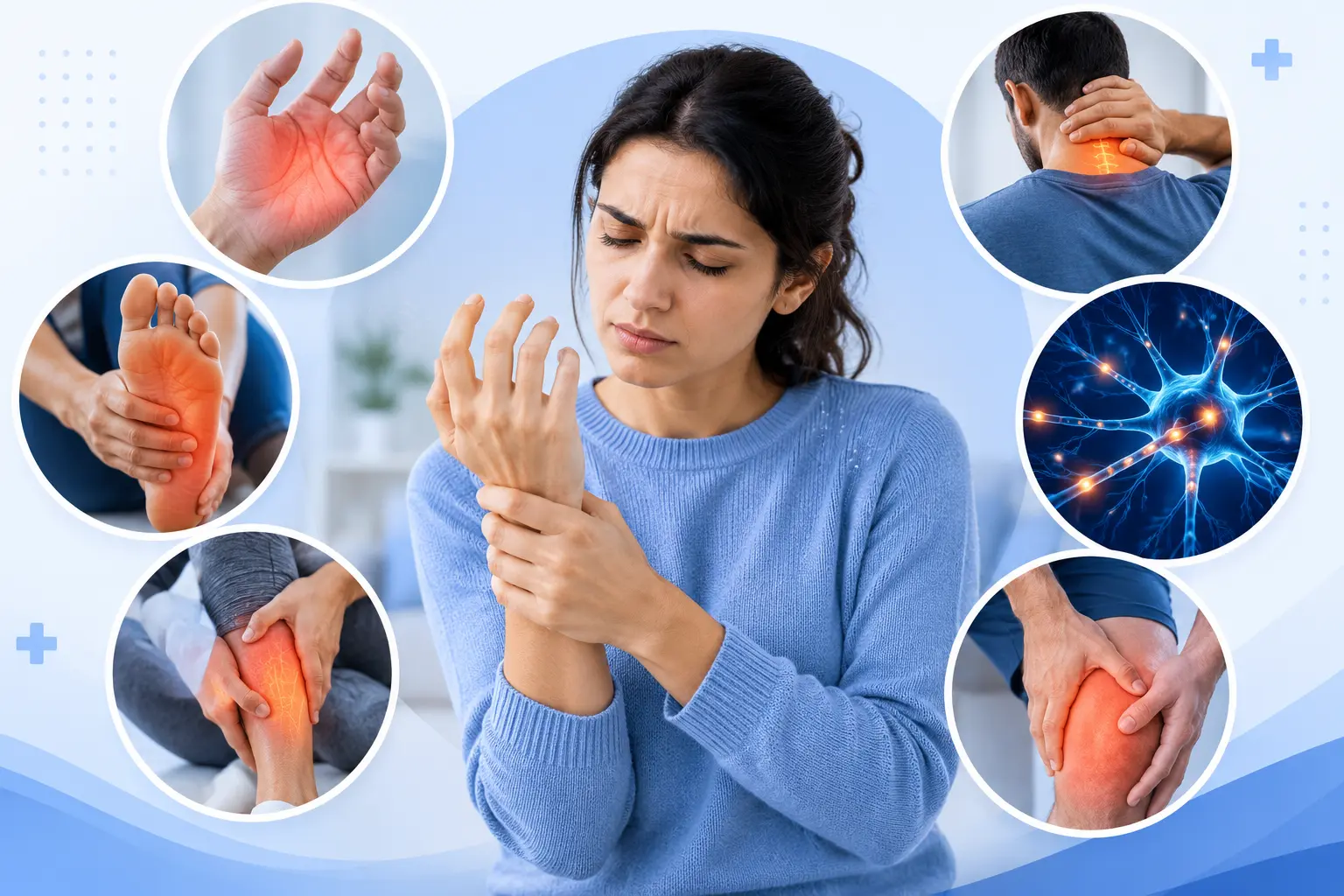
- The burning and tingling sensations can occur in the hands, feet, legs, arms, or even in one’s back.
Common Causes of Burning and Tingling Pain
Burning sensations in hands and feet can result from a variety of conditions that affect the nerves, spine, or blood circulation. A few of the causes include:
- Nerve compression, such as sciatica, herniated discs, carpal tunnel syndrome, or pinched nerves
- Peripheral neuropathy, often caused by diabetes or long-term nerve damage
- Vitamin deficiencies, particularly vitamins B1, B6, B12, and vitamin E
- Injuries or trauma, including burns, frostbite, whiplash, or sports injuries
- Spinal conditions, such as spinal stenosis or cervical and lumbar radiculopathy
- Poor blood circulation, including peripheral artery disease, Raynaud’s syndrome, and thoracic outlet syndrome
- Neurological disorders, including stroke, multiple sclerosis, brain or spinal cord disorders
- Autoimmune and inflammatory diseases, such as lupus, rheumatoid arthritis, Sjögren’s syndrome, and Guillain-Barré syndrome
- Infections, including shingles, Lyme disease, HIV, meningitis, and encephalitis
- Metabolic and hormonal disorders, such as diabetes, thyroid disorders, low blood sugar, electrolyte imbalances, and kidney disease
- Medication side effects and toxin exposure, including chemotherapy, excessive alcohol use, heavy metals, and carbon monoxide poisoning
- Lifestyle and temporary factors, including prolonged pressure on a nerve, dehydration, anxiety, hyperventilation, migraines, and panic attacks
Identifying the underlying cause is essential for determining the most effective treatment and preventing further nerve damage.
What are the Symptoms?
The signs of a burning and tingling sensation could differ according to the cause and affected nerve fibres. A few commonly experienced symptoms are:
- Pins and needles sensation (prickling or tingling)
- Burning pain that may be constant or intermittent
- Numbness or reduced sensation in the affected area
- Sharp, stabbing, or electric shock-like pain
- Muscle weakness or difficulty gripping and lifting objects
- Increased sensitivity to touch or temperature
- Reduced ability to feel heat, cold, or pain
- Loss of balance or coordination, increasing the risk of falls
- Crawling, buzzing, or itching sensations on the skin
- Feeling as though you’re wearing gloves or socks when you’re not
- Symptoms that worsen at night, disrupting sleep
- Changes in sweating, dizziness, or digestive problems (if autonomic nerves are affected)
Some patients only endure temporary problems, whereas for other individuals, the symptoms might become so severe that medical intervention becomes necessary.
When To Seek Professional Help
While occasional burning or tingling is often harmless, persistent, recurring, or worsening symptoms may indicate an underlying nerve or medical condition.
Seeking timely medical attention can help identify the cause, prevent complications, and improve treatment outcomes.
Consult a healthcare professional if you experience:
- Persistent or recurring burning or tingling
- Worsening pain or numbness
- Muscle weakness or difficulty walking
- Loss of balance or coordination
- Pain that affects daily activities or sleep
- Symptoms after an injury
- Burning or tingling associated with diabetes or another chronic condition
If you’re experiencing persistent burning or tingling pain, don’t ignore the symptoms. Dr. Namrata Dabas, one of the top pain management specialists in Delhi NCR, can help identify the underlying cause and recommend a personalised treatment plan to relieve pain, restore function, and improve your quality of life.
Burning Sensation Treatment in Delhi NCR
Burning or tingling pain can often be effectively managed once the underlying cause is identified. At the best pain management centres in Delhi NCR, treatment is tailored to the specific cause, severity of symptoms, and individual health needs.
The goal is not only to relieve pain but also to improve nerve function, restore mobility, and prevent future complications. A few treatment options are:
- Medicines that help reduce pain
- Image-guided nerve blocks to give relief from pain
- Physiotherapy and rehabilitation to increase muscle strength and flexibility
- Regenerative therapies, such as PRP, when clinically appropriate
- Modification in lifestyle if there is any underlying problem like diabetes or nutrition deficiency
- Minimally invasive pain management techniques in case of chronic or persistent pain in nerves
Consultation with an expert pain management specialist in Delhi NCR, like Dr. Namrata Dabas, would help you in finding out the cause of your problem and receive the best treatment possible.

 WhatsApp