
Hip Pain Treatment in Delhi-NCR
Hip pain has a way of quietly taking over daily life. It starts small, a twinge when you get out of the car, a stiffness after sitting too long, and before you know it, you’re avoiding stairs, skipping your morning walk, or waking up at night because you can’t find a comfortable position. If this sounds familiar, you’re not alone, and more importantly, you don’t have to live with it.
Whether your hip pain came on suddenly after an injury, has been building up gradually over months, or seems to flare up for no clear reason at all, understanding why it’s happening is the first real step toward fixing it. Too often, patients try a mix of rest, painkillers, and home remedies before ever getting a proper diagnosis, only to find the pain keeps coming back. With the right evaluation and a treatment plan tailored to your specific condition, most people are able to get back to moving freely and doing the things they love, without unnecessary surgery or months of guesswork.
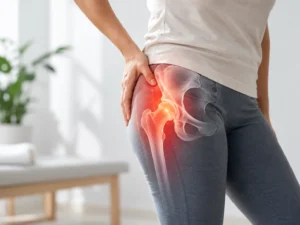
Dr. Namrata Dabas, a pain management and regenerative medicine specialist based in Delhi-NCR, helps patients get to the root of their hip pain and treat it, often without surgery. This page walks you through what causes hip pain, how it’s diagnosed, and the treatment options available today, so you can make an informed decision about your care.
Reach Out for Expert Care
What Causes Hip Pain?
Hip pain doesn’t always come from the hip joint itself, it can also radiate from the lower back, groin, or thigh, which is why an accurate diagnosis matters more than most people realise. In fact, two people with the exact same symptom, “pain on the outside of the hip”, can end up with completely different diagnoses once properly examined.
The most common causes Dr. Namrata Dabas sees in her Delhi-NCR practice include:
- Osteoarthritis of the hip: Wear-and-tear of the cartilage cushioning the joint, common with age
- Bursitis: Inflammation of the fluid-filled sacs that cushion the hip joint
- Tendinitis or muscle strain: Overuse or injury to the muscles and tendons around the hip
- Labral tears: Damage to the cartilage ring that stabilises the hip socket
- Avascular necrosis (AVN): Reduced blood supply to the hip bone, often linked to steroid use or trauma
- Referred pain from the spine: A slipped disc or spinal nerve irritation can mimic hip pain
- Post-injury or post-surgical pain: Lingering discomfort after a fall, fracture, or prior hip procedure
Because so many conditions can present as “hip pain,” self-diagnosing from symptoms alone often leads to the wrong treatment. A proper clinical evaluation is the fastest route to real relief.
What Are the Warning Signs You Shouldn’t Ignore?
Most hip pain builds up gradually, but certain symptoms signal that it’s time to see a specialist rather than wait it out. The tricky part is that these signs are easy to brush off as “just getting older” or “a bad night’s sleep”, until they start affecting your everyday routine.
Watch for:
- Pain that persists beyond 2–3 weeks despite rest
- Difficulty walking, climbing stairs, or getting up from a chair
- Pain that wakes you up at night or worsens while lying on the affected side
- A clicking, locking, or grinding sensation in the joint
- Swelling, warmth, or redness around the hip
- Pain radiating down the thigh or into the groin
- Reduced range of motion, struggling to put on socks or tie shoelaces
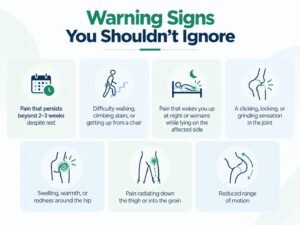
If any of these apply to you, it’s worth getting evaluated before the underlying issue progresses further and limits your mobility more permanently. Catching these signs early often means simpler, faster treatment, and a much quicker return to your normal routine.
How Is Hip Pain Diagnosed?
An accurate diagnosis is the foundation of effective hip pain treatment, and Dr. Namrata Dabas takes a structured, evidence-based approach to pinpoint the exact source of pain before recommending any treatment.
The diagnostic process typically includes:
- Detailed clinical history: Understanding when the pain started, what makes it better or worse, and your daily activity levels
- Physical examination: Assessing range of motion, gait, and tenderness points
- Imaging: X-rays to check joint space and bone changes; MRI for soft tissue, labral, or early-stage AVN evaluation
- Diagnostic nerve blocks: Used in select cases to confirm whether pain is originating from the hip joint or being referred from the spine
This step-by-step evaluation ensures that treatment is targeted to the actual cause of your pain, not just the symptoms, which is what makes the difference between temporary relief and lasting recovery.
What Are the Non-Surgical Treatment Options for Hip Pain?
Most patients are surprised to learn that a majority of hip pain cases can be effectively managed without surgery, especially when treated early with the right combination of therapies.
Dr. Namrata’s non-surgical hip pain treatment approach in Delhi-NCR may include:
- Medication management: Targeted anti-inflammatory and pain-relief protocols
- Image-guided injections: Corticosteroid or hyaluronic acid injections delivered precisely into the joint space
- Regenerative therapies: Platelet-Rich Plasma (PRP) and BMAC therapy to support tissue healing and reduce inflammation
- Radiofrequency Ablation (RFA): For select cases where nerve-related pain needs to be interrupted
- Lifestyle and weight management guidance: Reducing joint load to slow progression
- Physiotherapy: Customised exercises to strengthen surrounding muscles and improve joint stability
These therapies work by addressing inflammation, improving joint mechanics, and in the case of regenerative treatments, actively supporting the body’s own healing process, rather than just masking pain.
When Is Surgery Necessary for Hip Pain?
Surgery is considered only when non-surgical treatments haven’t provided adequate relief, or when structural damage to the joint is significant enough to affect long-term function.
Signs that surgical evaluation may be needed include:
- Advanced-stage osteoarthritis with bone-on-bone contact
- Significant avascular necrosis affecting joint structure
- Complete labral or ligament tears not responding to conservative care
- Severe, persistent pain that limits basic daily activities despite treatment
Even in these cases, Dr. Namrata’s role is to ensure every appropriate non-surgical avenue has been explored first, and if surgery is genuinely required, to guide patients toward the right specialist and prepare them for the best possible outcome.
What Can You Expect During Recovery?
Recovery timelines for hip pain treatment vary widely depending on the therapy used, but most non-surgical treatments allow patients to resume normal activities far faster than they expect. Knowing what’s “normal” at each stage also helps ease the worry that often comes with recovering from any kind of joint treatment.
General recovery guidance includes:
- Injections/RFA: Mild soreness for 24 – 48 hours, with noticeable relief typically within a week
- PRP/Regenerative therapy: Gradual improvement over 4 – 6 weeks as healing progresses
- Physiotherapy programs: Ongoing, with strength and mobility improving steadily over several weeks
- Follow-up reviews: Scheduled to track progress and adjust the treatment plan as needed
Most patients are able to return to light daily activity almost immediately, with full benefits of regenerative or injection-based treatments building progressively over the following weeks.
How Much Does Hip Pain Treatment Cost in Delhi-NCR?
The cost of hip pain treatment in Delhi-NCR varies depending on the diagnosis, the specific therapy recommended, and the number of sessions required. Since treatment is tailored to each patient rather than offered as a fixed package, pricing is confirmed only after your evaluation.
Factors that typically influence the cost include:
- The underlying cause of your hip pain (arthritis, bursitis, labral tear, AVN, etc.)
- The type of treatment recommended, whether injections, PRP, Stem Cell/BMAC, or RFA
- Number of sessions needed based on the severity of your condition
- Whether imaging (X-ray, ultrasound, or MRI) is required for an accurate diagnosis
- Any additional physiotherapy or rehabilitation included in your treatment plan
During your consultation, Dr. Namrata Dabas’s team will walk you through the exact cost breakdown for your specific treatment plan, so you know what to expect before you begin. Many patients find it helpful to ask about the total cost across the full course of treatment, rather than just the price of a single session, to plan accordingly.
Why Choose Dr. Namrata Dabas for Hip Pain Treatment in Delhi-NCR?
Choosing the right specialist for hip pain matters because the wrong treatment path can delay recovery or lead to unnecessary surgery and this is where Dr. Namrata’s non-surgical, evidence-based focus sets her apart.
Patients choose Dr. Namrata Dabas because she offers:
- 20+ years of experience in pain management and regenerative medicine
- Image-guided precision injections for greater accuracy and safety
- Personalised treatment plans based on your specific diagnosis, not a generic protocol
- A non-surgical, regenerative approach focused on healing, not just symptom relief
- Multiple consultation locations including Dwarka, Sonipat and Gurugram for easier access
Her approach combines clinical precision with genuine patient education, so you always understand why a treatment is being recommended, not just what it involves.
Consultation Centres for PRP Therapy in Delhi-NCR
Dr. Namrata Dabas consults at leading hospitals across Delhi-NCR, with advanced interventional procedures for hip pain carried out at her dedicated centre in Sonipat. Patients from Dwarka, Gurugram, and nearby areas can easily access expert care along with follow-up support.
Hip Pain Treatment Consultation in Dwarka
Visit Manipal Hospital, Dwarka, for a thorough evaluation, diagnosis, and a hip pain treatment plan tailored to you.
Hip Pain Procedures in Sonipat
Advanced procedures such as image-guided injections and regenerative therapy (PRP/Stem Cell) for hip pain are performed at Manipal Jivisha Cancer Centre, Sonipat, along with follow-up care.
Hip Pain Treatment Consultation in Gurugram
Consult Dr. Namrata Dabas at Manipal Hospital, Palam Vihar, Gurugram, for a thorough assessment and personalised hip pain treatment plan.
Patients travelling from Rohtak, Panipat, Karnal, and other parts of Haryana and Delhi-NCR regularly visit these centres for evaluation, treatment, and continued care.
Getting Back to Moving Freely Starts With One Consultation
Whether it’s a dull ache after sitting too long or a sharp pain that stops you mid-stride, hip pain has a way of chipping away at everyday life. If rest, medication, or physiotherapy haven’t brought the relief you were hoping for, it may be time for a more targeted approach, one built around your specific diagnosis rather than trial and error.
With Dr. Namrata Dabas treatment focuses on addressing the root cause, not just managing the pain, so you can move, walk, and live without constantly working around your hip.
Book your consultation today and take the first step toward lasting relief, without undergoing surgery.
Medical Disclaimer: The information on this page is provided for educational purposes only and should not be used as a substitute for medical advice. Treatment recommendations vary from person to person and should always be based on an individual consultation and clinical evaluation by a qualified healthcare professional.
Frequently Asked Questions
Can hip pain be cured without surgery? expand_more
In most cases, yes. A combination of physiotherapy, targeted injections, and regenerative therapies like PRP can significantly reduce or resolve hip pain without the need for surgical intervention, especially when treated early.
How long does it take for hip pain treatment to show results? expand_more
This depends on the treatment. Injection-based therapies often show relief within days, while regenerative treatments like PRP typically build results over 4–6 weeks as the tissue heals.
Is hip pain treatment safe for older adults? expand_more
Yes. Most non-surgical hip pain treatments, including image-guided injections and physiotherapy, are considered safe for older adults and are often preferred over surgery due to faster recovery and lower risk.
Can sitting for long hours cause hip pain? expand_more
Yes. Prolonged sitting can tighten hip flexor muscles, reduce blood flow to the joint, and contribute to bursitis or muscular pain, especially in people with sedentary jobs or long commutes.
When should I see a specialist instead of waiting for hip pain to go away on its own? expand_more
If pain persists beyond 2–3 weeks, disrupts sleep, or limits your ability to walk or climb stairs, it's best to consult a specialist rather than self-manage, as early diagnosis prevents the condition from worsening.

Dr. Namrata Dabas's Medical Content Team
Dr. Namrata Dabas’s medical content team specialises in creating accurate, clear, and patient-focused healthcare content. With strong clinical understanding and expertise in technical writing and SEO, the team translates complex medical information into reliable, accessible resources that support informed decisions and uphold Dr. Namrata Dabas’s commitment to quality care.
This content is reviewed by Dr. Namrata Dabas
Related Conditions

Shoulder Pain Treatment in Delhi-NCR
Persistent shoulder pain can quietly affect daily life, making it hard to lift your arm, reach overhead, or even sleep…
Joint & Musculoskeletal Pain Treatment in Delhi NCR
Coccydynia (Tailbone Pain)Treatment in Delhi-NCR
Coccydynia is the medical term for tailbone pain discomfort or soreness at the base of your spine, right where the…
Related Blogs

Nerve vs. Muscle vs. Joint Pain: Know the Difference
Pain is your body’s alarm system but not all alarms mean the same thing. A…
Read Article →
Knee Pain When Climbing Stairs: Should I Be Worried?
Knee pain when climbing stairs is one of the most common early warning signs of…
Read Article →
Frozen Shoulder: Surgery or Can It Heal Without It?
Most frozen shoulders heal without surgery. With timely pain management, most patients regain full movement…
Read Article → WhatsApp