
Post-Surgical Chronic Pain: Why it Happens and What Helps
Imagine this. Four months ago, you had surgery. The doctors were pleased, the scar has healed neatly, and your family has stopped asking how you’re feeling.
But you still wake up with a burning line near the scar. A waistband or a bedsheet can set off a sharp, electric jolt. And on some evenings, a deep ache settles in that no tablet seems to touch.
So you start wondering: Is this normal? Am I healing slowly? Or am I just being dramatic?
You’re not. Pain that lingers after surgery is real, medically recognised and far more common than most people are told. Let’s talk about why it happens, and, more importantly, what can help.
Reach Out for Expert Care
What Is Post-Surgical Chronic Pain?
Post-surgical chronic pain is pain that starts or worsens after an operation and continues for three months or longer, well past the usual healing period. It isn’t explained by infection or another new problem, and it often feels different from ordinary recovery pain.
Some pain after surgery is simply part of the deal. It’s sharpest in the first few days, eases week by week, and responds to regular painkillers.
Chronic pain after surgery behaves differently. It lingers. It plateaus. Sometimes it even changes character, turning from a dull soreness into burning, tingling or shooting sensations.
Doctors use a simple benchmark: if pain is still there three months on, it has crossed from “healing pain” into “persistent pain”.
Why Does Pain Continue After the Surgical Wound Has Healed?
Pain often continues after healing because nerves were irritated during surgery, the pain-signalling system became overactive, or scar tissue and inflammation are still affecting nearby tissues. The wound closes, but the nerves may keep firing.
Think of your nervous system as a home alarm. After surgery it goes on high alert, which is exactly what it should do. In some people, it doesn’t switch off once the danger has passed.
Here’s what can keep it ringing:
- Nerve injury: Even with careful technique, small nerves can get stretched or cut, sending faulty signals that feel burning or electric.
- A “turned-up” pain system: After prolonged pain signals, the spinal cord and brain become extra sensitive, so even light touch may hurt.
- Scar tissue and neuromas: Scars can tug on nearby nerves, and a cut nerve end can form a tender knot called a neuroma.
- Lingering inflammation: The body’s healing response sometimes stays switched on longer than needed.
The takeaway: persistent pain after surgery is usually a nerve and pain-processing problem, not a sign of weakness or imagination.
How Common Is Chronic Pain After Surgery?
Chronic pain after surgery is more common than most people realise. Depending on the type of operation, studies suggest roughly 1 in 10 to as many as 1 in 2 patients have some lingering pain, and about 2–10% experience it severely.
The risk varies from one surgery to another. Research points to higher rates after:
- Amputations
- Breast surgery and chest surgery
- Heart surgery through the breastbone
- Hernia repair, where pain after hernia surgery is a well-known concern
- Knee replacement, where some people find pain after knee replacement not going away long after recovery
- Spine surgery, where ongoing pain is often called failed back surgery pain or persistent spinal pain syndrome
- Caesarean section
So if you’re dealing with this, you’re in a much larger group than the silence around it suggests. Lingering pain after surgery is widespread, and it’s a valid medical concern.
Who Is More Likely to Develop Pain After Surgery?
Chronic pain after surgery is more likely in people who had pain before the operation, experienced severe pain in the first few days afterwards, or felt very anxious about surgery. The type and length of the procedure also play a role.
No one can predict this perfectly, but doctors have noticed a few patterns:
- Long-standing pain in the same area before surgery
- Intense pain in the first week after the operation
- High anxiety or a tendency to expect the worst
- Longer, more complex operations involving major nerves
- Radiotherapy or chemotherapy around the time of surgery
- Younger age and female gender, in some studies
Having these factors doesn’t mean you’ll definitely develop chronic pain. It just helps doctors know who to watch more closely. Risk comes from a mix of pain history, surgery type and how your nervous system responds, and none of it is your doing.
What Does Post-Surgical Chronic Pain Feel Like?
Post-surgical chronic pain often feels burning, shooting, stabbing or tingling around the surgical area. Many people also notice numbness, extreme sensitivity to touch, or pain that flares with movement or worsens at night.
Everyone describes it a little differently, but these are the sensations patients mention most:
- A burning or “hot wire” feeling along the scar
- Sudden electric shocks or shooting pain
- Pins and needles, or patches of numbness
- Pain from things that shouldn’t hurt, like a light touch or clothing (doctors call this allodynia)
- A deep, nagging ache that builds through the day
- Pain that makes you stiffen or protect the area, leading to muscle aches elsewhere
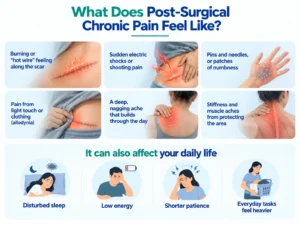
And pain like this rarely stays in one place. It can eat into sleep, sap your energy, shorten your patience and make everyday jobs feel heavier. That’s not weakness. It’s what constant pain does to anyone.
When Should You See a Pain Specialist After Surgery?
See a pain specialist if pain lasts beyond three months after surgery, is getting worse, disturbs your sleep or daily life, or feels burning, shooting or electric. Seek urgent care first for fever, redness, swelling, discharge or sudden severe pain.
Let’s start with the safety check. Contact your surgeon or hospital straight away if you notice:
- Fever or chills
- Redness, warmth, swelling or discharge at the wound
- Sudden severe pain, or new weakness or numbness
Once infection is ruled out and the pain is still there, see a pain management specialist, even before the three-month mark if it’s severe. Early treatment stops pain from becoming firmly “wired in”, and the goal is to help you sleep, move and live better, not just dull the pain.
What Treatments Help Post-Surgical Chronic Pain?
Post-surgical pain treatment usually combines several approaches: nerve-targeted medicines, nerve blocks, radiofrequency treatments, physiotherapy and psychological support. Because each person’s pain is different, a personalised plan works better than any single treatment.
There’s rarely one magic fix. The best results come from layering treatments around what’s driving your pain.
Medicines made for nerves. Ordinary painkillers often fall short for nerve-type pain. Doctors may use medicines designed to calm overactive nerves, plus numbing patches or creams for localised areas.
Nerve blocks. A nerve block places local anaesthetic, sometimes with an anti-inflammatory medicine, close to the irritated nerve. It can ease pain and also helps pinpoint which nerve is the culprit. For some people, relief lasts well beyond the numbing effect.
Radiofrequency treatment. When a nerve block brings good but temporary relief, radiofrequency ablation for nerve pain may be considered. It uses controlled energy to quieten pain signals from a specific nerve, aiming for longer relief without another operation.
Scar and trigger point treatment. If scar tissue or tight muscle knots are tugging on nearby nerves, targeted injections and manual therapy can release that tension.
Regenerative options. In selected cases, treatments like PRP may be explored to support tissue health. The evidence is still evolving, so these are chosen carefully and discussed honestly.
Physiotherapy. Pain makes us guard and avoid movement, which leads to stiffness and more pain. Guided physiotherapy gently rebuilds strength and confidence at a safe pace.
Psychological support. Pain and the brain are deeply linked. Pain-coping skills, relaxation and cognitive behavioural approaches don’t mean “it’s in your head”. They help calm an over-alert nervous system.
Advanced options. For severe pain that hasn’t responded to other measures, procedures such as spinal cord stimulation may be considered at specialised centres.
The most effective post-operative pain management is layered and personal, working on the nerve, the body and the mind together.
What Can You Do at Home to Ease Post-Surgical Pain?
At home, you can ease post-surgical pain by pacing your activities, using comfortable warmth or cold, gently retraining sensitive skin, tracking your pain patterns and winding down well at night. These habits support medical treatment but don’t replace it.
Small habits can quietly lower the pain volume:
- Pace yourself. Break tasks into smaller chunks instead of pushing through and crashing later.
- Retrain sensitive skin. Once the wound has fully healed, and only with your doctor’s go-ahead, lightly touching the area with different textures can help your skin tolerate touch again.
- Use heat or cold wisely. Choose whichever feels better, and avoid extreme temperatures over numb skin.
- Keep a simple pain diary. Jot down when pain peaks and what eases it. These notes give your doctor valuable clues.
- Build a calming bedtime routine. A steady wind-down helps your body cope better.
Home habits help turn the volume down while professional treatment works on the cause.
Can Post-Surgical Chronic Pain Be Cured?
Post-surgical chronic pain can often be reduced significantly, and sometimes it resolves completely, especially with early, targeted treatment. Outcomes vary: some people see the pain fade considerably, while others get it well controlled and return to the life they love, even if a little discomfort lingers. Most people regain better movement, sleep and quality of life with the right plan.
Three things make the biggest difference:
- Starting early, before nerves settle into long-term pain patterns
- Sticking with the plan, since improvement is often gradual
- Being open with your doctor about what is and isn’t working
A good outcome doesn’t always mean zero pain. It means pain that no longer runs your life.
You’ve already done the hard part by getting through surgery. If your pain has outlasted your recovery, speak to a pain management specialist, because relief is often closer than it feels.
The Bottom Line
Pain that lingers after surgery isn’t weakness, and it isn’t “all in your head”. It’s usually your nerves and pain-signalling system staying on high alert long after the wound has healed. The good news is that it’s treatable. With early attention and a personalised plan, most people find real relief and get back to sleeping, moving and living more comfortably.
You’ve already done the hard part by getting through surgery. If your pain has outlasted your recovery, don’t wait it out. You may consult Dr. Namrata Dabas or any qualified pain specialist, because relief is often closer than it feels.

 WhatsApp